4 Major Eastern Therapeutic Approaches
- Mrunal Mohite
- May 26
- 5 min read

Updated: May 27
The Gut-brain Hypothesis suggests a bidirectional communication pathway between the gastrointestinal system and the brain. Signals may originate in the gut, involving microbes, immune cells, and metabolites, and be transmitted to the brain; conversely, signals from the brain, including neural and hormonal signals, can be directed back to the gut.
Observational studies in humans have identified associations between the composition of the gut microbiome and conditions such as depression and anxiety, as well as correlations between gastrointestinal symptoms and neurological or psychiatric disorders, exemplified by conditions such as irritable bowel syndrome (IBS), inflammatory bowel disease (IBD), and Parkinson’s disease.
So as the body and mind is interconnected, the treatment as well as enhancement of the mind should also be interconnected.
Traditional eastern medicine approaches perceive the individual in more wholistic manner and thus the treatments are also directed towards the whole system rather than dysfunctional part of the individual.
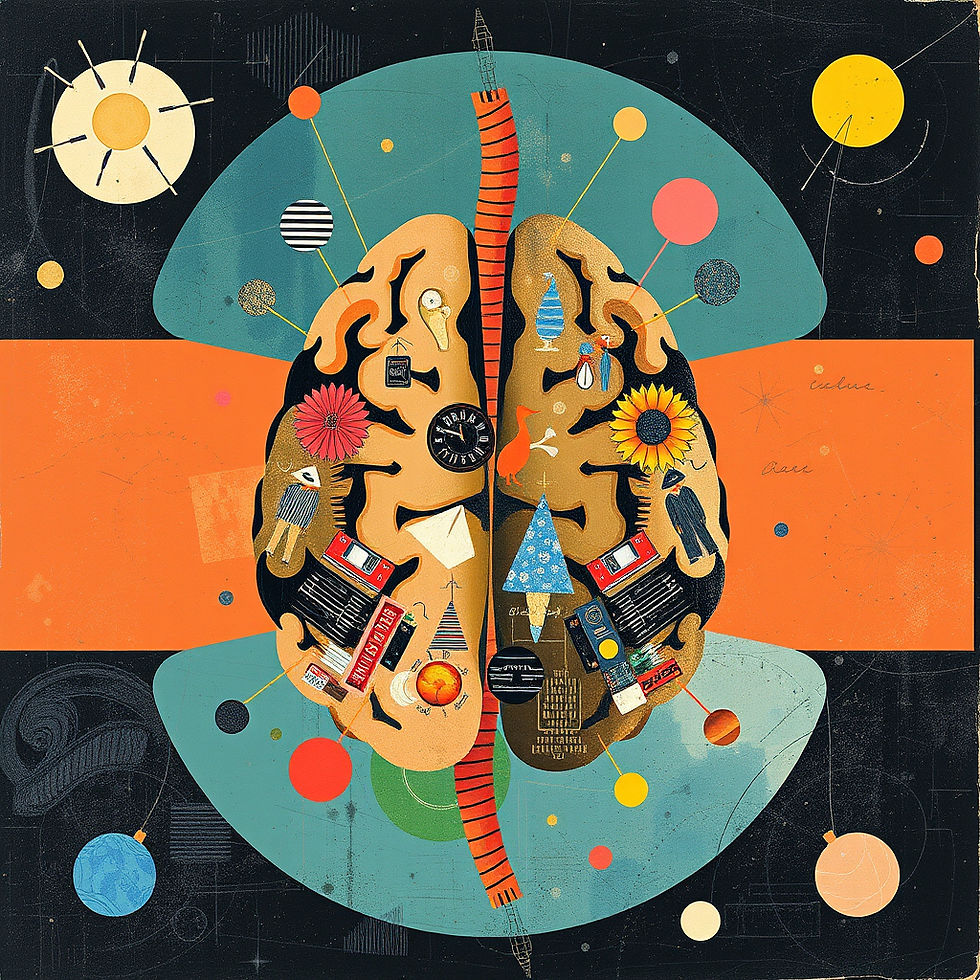
Let us look some of the eastern mind-body approaches.
Buddhist Approach
Buddhist psychology is essentially an attempt to understand the nature of transcendence (nirvāṇa) and the methods of attaining it. A psychological framework rooted in Buddhist philosophy and practice, focusing on understanding the nature of mind, suffering (dukkha), and paths to well-being.

The FOUR Noble Truths
The First Truth is that we must recognize suffering and frustration as a part of life. We suffer from pain, sickness, and inevitable death. This is an inescapable truth for all living beings.
The Second Truth is that this suffering comes from clinging, craving, and grasping. The world seems to offer many comforts and pleasures, but these external things never bring lasting happiness.
The Third Truth reveals that the cause of suffering can be eliminated when we give up craving for pleasures and comforts and expecting them to last. Nothing endures, all is transitory, and recognizing this truth can set us fre e.
The Fourth Truth is the way to let go of these cravings is to follow the Eightfold Path. This path is a therapeutic journey of eight steps.
Mindfulness and concentration are central exercises in the pursuit of enlightenment and transcendence. According to the renowned Indian meditation teacher, S. N. Goenka (1993), the two fundamental forms of Buddhist meditation are samatha and vipassana.
Samatha meditation is characterized by continuous concentration on a single object, such as breathing, a candle light, or a face of the Buddha. Vipassana practice shows improvement in stress, immune system function, decreased blood pressure and heart rate, increased sleep quality, and decreased chronic pain.
The Vedic Approach
Indian psychology involves the study of the person. The person is conceived as a composite of body, mind, and consciousness. Body refers to the nervous system, the senses, and associated structures connected with the brain.
The mind is the hypothetical cognitive instrument related to the body at one end and consciousness at the other. Consciousness is conceived to be irreducibly distinct from body and mind. It constitutes the nonphysical aspect of the person.

It is a system of psychology that is rooted in classical Indian thought and is implied in numerous techniques prevalent in the subcontinent for psycho-spiritual development such as the various forms of yoga.
Psychology is an important discipline to understand the role of the mind and to learn ways to control and use it as a resource for meeting successfully the existential challenges one faces.
From a psychological perspective, then, one could say that all the three aspects of human nature—thought, passion, and action—are rolled into one. Psychology in the Indian tradition aims at
(a) liberating the person from the existential constraints, which are seen as sources of human frustrations and consequent suffering, and
(b) elevating her to a state of bliss and unconditioned existence through a process of self-realization.
It is understood that it is possible to achieve such liberation by continuous effort to create conflict-free conditions of living and by cultivating necessary psychophysical and spiritual habits conducive for personal growth and transformation. Such effort essentially involves practice of altruism, promotion of common good and control of ego drives and compulsions.
Chinese Approach
Tai Chi, also named as Tai Chi Chuan, Taijiquan, or Taiji, is an ancient form of traditional Chinese fitness exercise and a martial art which was developed in the 17th century in China, which incorporates both aerobic (body) exercise and (mind) meditation. It is a slow speed exercise, in which diaphragmatic breathing should be matched with graceful motion throughout the practice.

Zen Meditation is a special Chinese style of meditation. Zen emerged in China in the sixth century, which is one of the schools of Buddhist thought and certain aspects can be traced back to India. Zen incorporated Buddhist thoughts with Taoist influences, which emphasized the use of meditation in order to develop a state of mindfulness.
In the words of a Soto Zen master, Suzuki:
When you are practicing [Zen meditation], do not try to stop your thinking. Let it stop by itself. If something comes into your mind, let it come in, and let it go out…Many sensations come, many thoughts or images arise, but they are just waves of your own mind…If you leave your mind as it is, it will become calm. (1970, pp. 34-35).
Japanese Approach
Kintsugi is the 15th-century Japanese art of repairing broken pottery with lacquer mixed with powdered gold, silver, or platinum. Instead of hiding cracks, Kintsugi celebrates imperfections as part of the object’s history. Used metaphorically in therapy to highlight resilience, acceptance of imperfection, and growth through adversity.

Naikan Therapy was developed in the 1950s by Yoshimoto Ishin, a Japanese businessman and devout Shin Buddhist, rooted in Mishirabe.
It uses self reflection, specifically interpersonal relationships, as major area. It aims to promote gratitude, empathy and responsibility by shifting focus to relational awareness.
Three questions for you to reflect on after you choose a close person from your life:
What have I received from this person?
What have I given to this person?
What troubles or difficulties have I caused this person?
Hello and Welcome!
I am Mrunal Mohite, a RCI licensed Rehabilitation Psychologist and therapist working in chronic mental and physical health related issues since the past 4 years. I've helped individuals and couples increase their positive emotions, improve their communication, and foster a deeper understanding of themselves and others. You can book your session using Google or my website.
References
Alexander, J. (2017). Kintsugi wellness: The Japanese art of nourishing mind, body, and spirit. New York: HarperOne.
Bhatia NY, Jalgaonkar MP, Hargude AB, Sherje AP, Oza MJ, Doshi GM. Gut-Brain Axis and Neurological Disorders-How Microbiomes Affect our Mental Health. CNS Neurol Disord Drug Targets. 2023;22(7):1008-1030. doi: 10.2174/1871527321666220822172039. PMID: 36017855.
Carabotti M, Scirocco A, Maselli MA, Severi C. The gut-brain axis: interactions between enteric microbiota, central and enteric nervous systems. Ann Gastroenterol. 2015 Apr-Jun;28(2):203-209. PMID: 25830558; PMCID: PMC4367209.
Cruz, C., & Sasaki, J. Y. (2022). Kintsugi and resilience: Embracing imperfection in Japanese cultural psychology. Journal of Cross-Cultural Psychology, 53(4), 357–372. https://doi.org/10.1177/00220221221085359
Goldsby, Tamara & Goldsby, Michael. (2020). Eastern Integrative Medicine and Ancient Sound Healing Treatments for Stress: Recent Research Advances. Integrative medicine (Encinitas, Calif.). 19. 24-30.
Kariyawasam L, Ononaiye M, Irons C, Kirby SE. Compassion-based interventions in Asian communities: A meta-analysis of randomised controlled trials. Psychol Psychother. 2023 Mar;96(1):148-171. doi: 10.1111/papt.12431. Epub 2022 Oct 31. PMID: 36314962; PMCID: PMC10091769.
Kondo, A. (2013). Morita therapy and the process of accepting feelings. Tokyo: The International Foundation of Morita Therapy
Misra, G. (2014). Positive psychology and Indian psychology in need of mutual reinforcement. Psychological Studies, 59(1), 22–30. https://doi.org/10.1007/s12646-013-0228-4
Nakanishi, T. (2020). Kintsugi as a therapeutic metaphor: Applying Japanese aesthetics to resilience and mental health recovery. Asia Pacific Journal of Counseling and Psychotherapy, 11(2), 123–138. https://doi.org/10.1080/21507686.2020.1778456
Ozawa-de Silva, C. (2006). Awakening to relationships: Naikan therapy and the ethics of mindfulness in Japan. Transcultural Psychiatry, 43(4), 486–513. https://doi.org/10.1177/1363461506070782
Rao, K. R., & Paranjpe, A. C. (2016). Psychology in the Indian Tradition. Springer India.
Verma, A. K. (2023). Buddhism and Vipassana Meditation: A Scientific Method for Mental and Social Growth in the Modern Age. Millah: Journal of Religious Studies, 22(2), 583–610. https://doi.org/10.20885/millah.vol22.iss2.art11
Yuan Yuan Wang. Crossing Cultural Boundaries: Integrating Eastern Mind-Body Techniques for Diverse Western Learners. Chicago School of Professional Psychology.



Comments